
Changing Lives with Cub: Results from Our Clinical Field Trial
- Stephanie Douglas
- Jul 17
- 5 min read

Updated: 2 days ago

At Participant Assistive Products, our mission has always been clear: to design and deliver high-quality, affordable, and durable assistive devices that truly improve lives. One of our most important innovations, Cub wheelchair, was created to meet the needs of children with complex physical disabilities.
We have always believed that the right wheelchair can open new opportunities for health, education, play, and family life. But belief is not enough, we wanted to see the real-world impact. That is why we invested in a six-month clinical field trial of Cub, working with eleven children and their families in rural and urban settings.
The results were powerful, and in many cases, emotional. One mother shared, with tears in her eyes: “She reached up and hugged me. She’s never done that before.”
Moments like this remind us why the work we do matters.
In this article, we will share the findings of the trial, highlight what families experienced, and explain why Cub is already changing lives in dozens of countries worldwide.
Why Tilt Wheelchairs Matter
Experts around the world agree: children who cannot sit up by themselves, reposition on their own, or hold up their heads need a supportive seat with at least 45 degrees of tilt.

Tilt-in-space wheelchairs like Cub are not simply about comfort. They:
Help with posture and alignment.
Improve head, hand, and arm control.
Support better digestion, breathing, and blood pressure.
Reduce the risks of sliding or falling out of a chair.
Allow children to sit for longer periods and join in school, social activities, and play.
Dave Calver, one of our co-designers and an occupational therapist, explained:
“For a user who needs this type of wheelchair, I want the user to achieve increased independence, pressure relief, proper alignment of body postures, and decreased spasticity. With Cub, we attempted to develop a chair with all-terrain capability, the transportability of a stroller, and easily adjustable positioning features to make users, caregivers, and providers happy.”
Cub was designed to combine health benefits with usability to work not only in clinics and cities, but also in rural villages and outdoor environments
The Clinical Field Trial
To test Cub’s impact, we partnered with an independent team of experts to run a six-month clinical trial with eleven children in India.
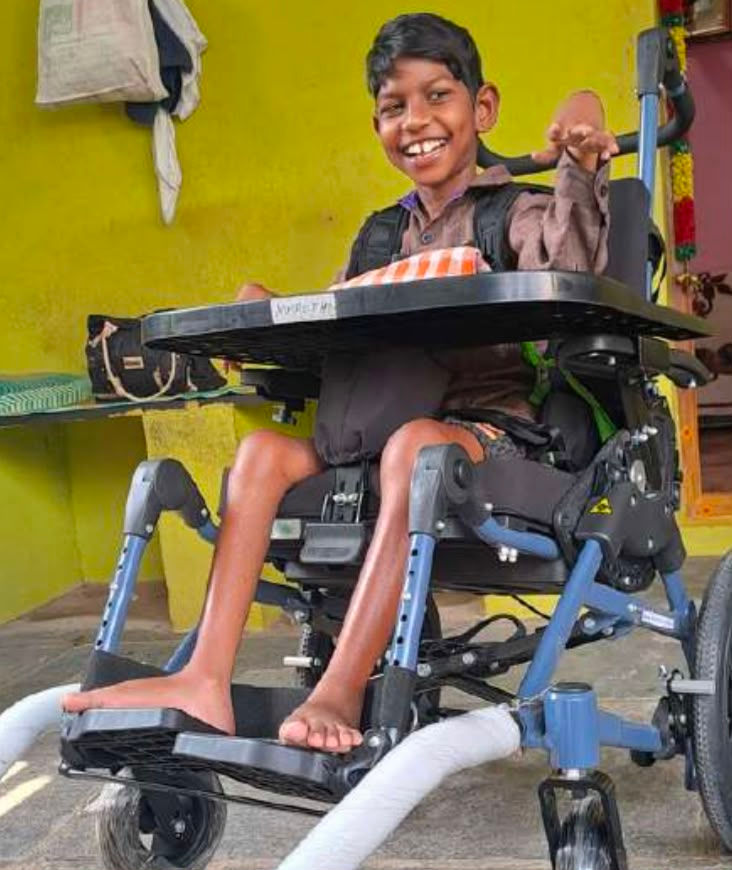
The trial included a diverse group of children:
From both rural and urban families
Diagnosed with conditions like cerebral palsy, Duchenne muscular dystrophy, and spinal cord injury
Some can self-propel, others can not
Both new wheelchair users and previous wheelchair users
Boys and girls of different ages, heights, and body sizes
Families with a wide range of household incomes
Caregivers were asked to provide detailed feedback using both rating scales and open-ended questions. This gave us both measurable data and personal stories about daily life before and after receiving Cub.
Life Before Cub
Before receiving Cub, caregivers reported that their children struggled with:
Inability to sit upright
Difficulty feeding themselves or other activities of daily living
Sliding or falling out of chairs
Limited outdoor mobility
Difficulty attending school
Weak arm, hand, or neck function
Caregivers themselves also faced major burdens:
Difficulty feeding their child
Physical strain from lifting and carrying
Constant attention needed, leaving little time for housework, siblings, or income-generating activities
Stress and worry about safety and falls
Challenges in taking their child to school, doctors, or family visits
For many families, life before Cub meant constant exhaustion and limited opportunities for both the child and the caregiver.
Transformations After Using Cub
After six months of using Cub, both children and caregivers reported dramatic changes.
For Children:
Improved sitting posture
Ability to sit for longer periods
Increased alertness at home and school
Improved hand and arm function
Ability to feed themselves in some cases
More confidence and happiness
Better social engagement with friends and relatives
For Caregivers:
Easier feeding and daily care
Freedom to take children outdoors and on errands
More time for household activities and other children
Less stress and worry
Joy in seeing their child sitting comfortably, playing, and learning
One of the most celebrated improvements was independent eating. Seven families reported feeding as a major challenge before Cub, and in four cases, children were able to start feeding themselves independently while seated in the wheelchair. This achievement was deeply meaningful to families.
All eleven caregivers said their child’s education improved after receiving Cub. Ten out of eleven said they would be willing to purchase Cub themselves.
Psychological and Social Impact
The benefits went beyond physical health. Caregivers experienced less stress and more positive emotions as parents. With reduced caregiving burdens, they could focus on other household needs, earn additional income, and spend time with their other children.

Children, meanwhile, could now play independently, socialize with friends, and engage in school. These opportunities for inclusion are just as important as medical outcomes.
Value and Willingness to Pay
One important measure of success is whether families see enough value in Cub to invest in it, even with limited incomes.
Caregivers reported a willingness to pay between $150 and $600 USD for Cub. Remarkably, the highest willingness came from rural families, even though their average income was only about $500 per month.
This shows how much value families place on Cub. For comparison, this is like a low-income family in a high-income country spending the equivalent of a used car to improve their child’s life.
Transportability and Rural Access
Transportation is one of the biggest barriers for wheelchair users worldwide. In many high-income countries, families rely on vans or large modified vehicles. But in rural India and many other parts of the world, families need a wheelchair that can fit in small cars, buses, and local vehicles.
Cub’s folding mechanism was tested during the trial. Some families needed additional training to use it correctly, but others reported that the folding feature gave them new access to public and private transport.

This ability to travel expands opportunities for children to attend school, visit relatives, and take part in community life.
Long-Term Value: Growing with the Child
Cub was designed not just for immediate benefits, but also for long-term value. The trial confirmed that the chair can be adjusted to fit children as they grow taller. With regular adjustments and simple cushion replacements, a child could use Cub for up to 10 years.
This long lifespan reduces total healthcare costs and makes Cub an affordable solution for families and health systems alike.
What We Learned
The field trial confirmed what we hoped:
Cub meets clinical goals: Children gained independence, better posture, improved mobility, and greater inclusion.
Caregivers benefited: Families experienced less stress, lower caregiving costs, and more available time.
Rural families saw the most value: Despite lower incomes, they reported higher satisfaction and greater willingness to pay.
Cub is transportable: With proper training, families can use it with common local transportation.
Cub offers long-term savings: Its expandability means it can serve a child for many years.
Most importantly, the children were happier, healthier, and more included in their families and communities.
More Than a Wheelchair
At Participant Assistive Products, we do not see Cub as “just a wheelchair.” We see it as a tool that gives children and families freedom, dignity, and hope.
From a mother’s joy at receiving her first hug, to children feeding themselves for the first time, the stories from this field trial remind us that small changes in design can create life-changing results.

Cub has already reached children in dozens of countries, and this trial in India shows its potential to serve millions more worldwide. Our commitment remains the same: to keep improving access, affordability, and durability, so that no child is left without the mobility and support they need.
Click here to read the full clinical trial.
You can also click here to read a published article on the clinical trial by the renowned Anand Mhatre, an Assistant Professor in the Division of Occupational Therapy at The Ohio State University.


Comments