.png)
From Communities to Classrooms: Hearing Care for All Children

As a young child, Chris King lived in a world wrapped in cotton wool. She wasn’t aware of the silence; to her, the world was simply a place of low-fidelity audio and half-finished sentences. She was the "Huh?" kid, the one who lived in a perpetual state of "What?" that probably tested the patience of every adult in a five-mile radius. She didn't realize she was missing the faint rustle of a falling leaf or the sharp clarity of a teacher’s instructions. She was just swimming through a sea of acoustic fog.
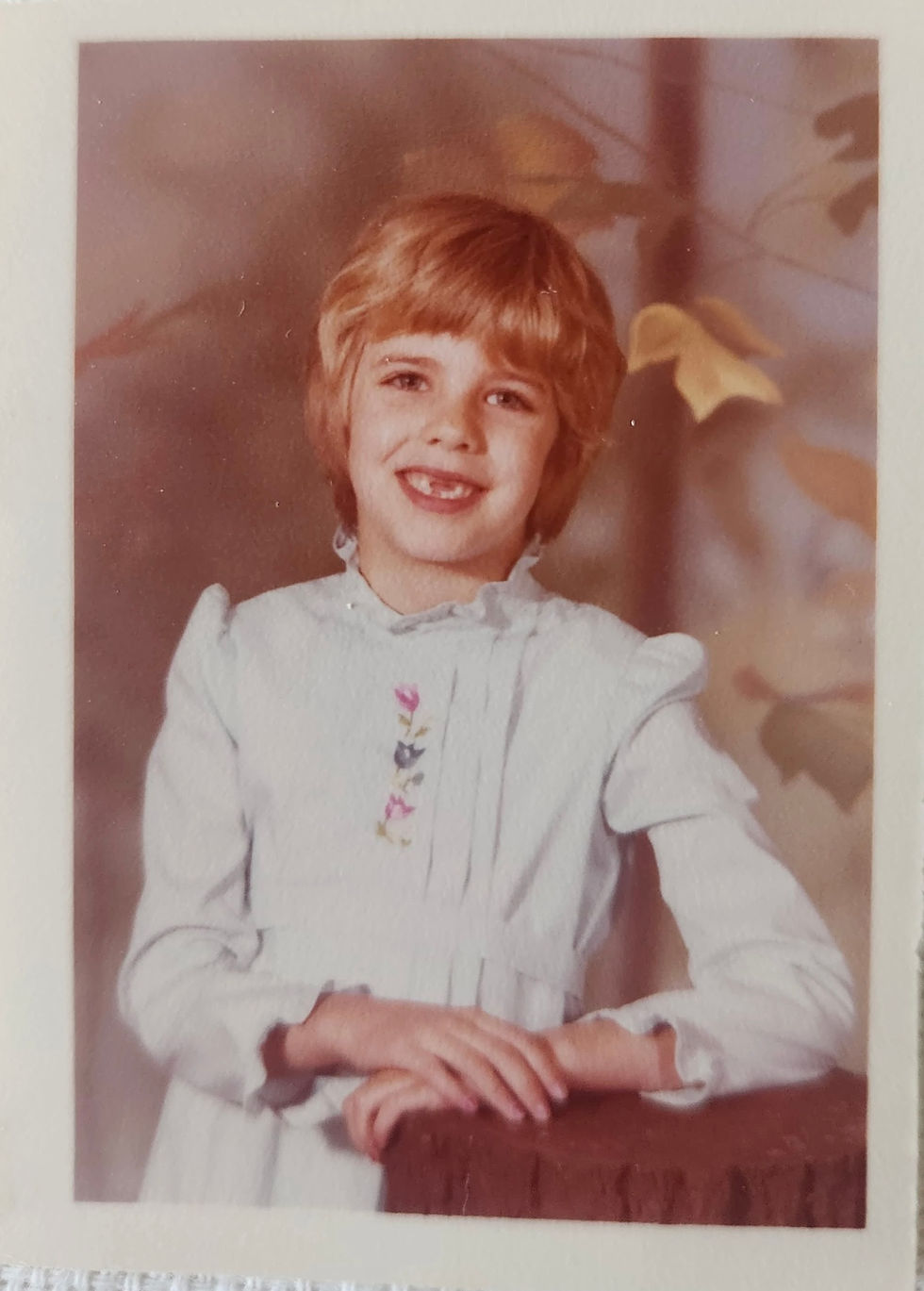
That fog only lifted because of a routine school hearing screening, the exact kind of "safety net" the WHO is fighting to make universal. Without it, she might have been labeled distracted or difficult. Instead, that screening flagged a hidden problem, Otitis Media with Effusion. Her middle ear had become a reservoir for trapped fluid, effectively turning her eardrums into damp sponges.
“The solution was a myringotomy. It sounds daunting, but the procedure was the key that unlocked the world for me.” Chris says.
A specialist made a microscopic incision in the tympanic membrane to vent the pressure and drain the stagnant fluid.
In simple terms: by creating that tiny opening, the specialist equalized the pressure (P) behind her eardrum, allowing it to finally vibrate freely again.
The drainage wasn't just physical, it was educational and social. Suddenly, the static was gone. The world wasn't a dull murmur anymore; it was a symphony of high-definition sound. That simple, unassuming school screening was the bridge between a life of confusion and a life of connection. It didn't just fix her ears; it gave her the ability to engage with the world on her own terms.
The World Health Organization (WHO) has set a powerful agenda for World Hearing Day: From communities to classrooms: hearing care for all children. This theme isn't just a catchy slogan; it is a global call to action. It recognizes that a child’s ability to hear is the bedrock of their ability to learn, socialize, and eventually contribute to the world as an adult.
When we talk about hearing care, we aren't just talking about doctors and hospitals. We are talking about a journey that begins in the home, moves through the neighborhood, and finds its most critical testing ground in the school system. For a child, hearing is the primary gateway to language. Without it, the world becomes a silent, confusing place where potential is often left untapped.
Why Children’s Hearing Matters
Hearing is often called the invisible sense. Unlike a physical injury or a vision problem that might cause a child to squint, hearing loss is frequently misunderstood as dreaming, laziness, or disobedience. However, the biological and developmental stakes are incredibly high.
The Foundation of Language
From the moment a baby is born, they are bathing in sound. They learn the rhythm of their parents' voices, the chime of a doorbell, and the phonetic building blocks of their native language. This is known as the critical period for language development. If a child has undetected hearing loss during these early years, their brain misses out on the stimulation needed to map out language centers.
Social and Emotional Health
We are social creatures. Children learn how to share, empathize, and make friends through verbal cues. A child who cannot hear clearly may feel isolated during playtime. This isolation can lead to anxiety, low self-esteem, and behavioral issues that stem from the simple frustration of not being understood.
The Role of the Community: The First Line of Defense
Hearing care starts long before a child enters a classroom. It begins in the community. This includes parents, extended family, community leaders, and local healthcare providers.
Awareness and Stigma
In many parts of the world, hearing loss is shrouded in stigma. Families may feel ashamed or believe that a child who cannot hear is incapable of learning. The community aspect of the WHO theme aims to break these myths. Hearing loss is a health condition, not a personality flaw or a lack of intelligence.
Early Identification
The community’s most vital role is identification. We need ears on the ground. This means training community health workers to recognize the signs of hearing loss in infants, such as:
Not startling at loud noises.
Not turning their head toward a sound by 6 months of age.
Delayed speech or limited vocabulary compared to peers.
Prevention Strategies
Many causes of childhood hearing loss are preventable. Communities can lead the way by:
Promoting Vaccination: Diseases like measles, mumps, rubella, and meningitis are leading causes of acquired hearing loss.
Nutrition: Ensuring mothers have access to proper prenatal care and nutrition to prevent birth complications.
Safe Listening: Teaching older children about the dangers of high-volume headphones and loud community events.
The Bridge: Moving from Home to School
The transition from the community to the classroom is a high-stakes period. In a classroom, a child is expected to follow complex instructions, interact with peers, and process new information rapidly. If a child has even a slight hearing loss, they may miss up to 50% of the classroom discussion.
Imagine trying to complete a puzzle when half the pieces are missing. That is what school feels like for a child with untreated hearing loss.
The Classroom: Where Potential is Unlocked
The classroom part of the WHO theme focuses on making educational environments inclusive. This requires a shift in how we view teaching and school infrastructure.

Universal Screening in Schools
The classroom should be a safety net. Ideally, every child should have their hearing screened upon entry into primary school. This catches children who may have passed infant screenings but developed late-onset hearing loss due to infections or genetics.
Teacher Training
Teachers are the most important observers in a child's life outside the family. A teacher who understands hearing care won't punish a child for not paying attention. Instead, they will recognize the signs:
The child frequently asks What? or Huh?
The child watches the teacher's lips intensely.
The child’s speech sounds muffled or flat.
The child performs better in one-on-one settings than in a noisy group.
Creating Hearing-Friendly Classrooms
Simple changes in the classroom environment can make a massive difference:
Acoustics: Adding rugs, curtains, or rubber tips on chair legs to reduce background noise.
Preferential Seating: Ensuring the child with hearing difficulty sits near the front where they can see the teacher's face clearly.
Assistive Technology: Using FM systems where the teacher wears a microphone that transmits sound directly to the child's hearing aid or cochlear implant.
The Technology of Connection
We live in an age of miracles when it comes to hearing technology. Hearing care for all means ensuring these tools aren't just for the wealthy, but for every child in every corner of the globe.
Hearing Aids
Modern hearing aids are tiny computers. They don't just make things louder; they make speech clearer by filtering out background noise. For a child, a well-fitted hearing aid is the difference between a life of silence and a life of conversation.

Cochlear Implants
For children with profound deafness, cochlear implants bypass the damaged parts of the ear and stimulate the hearing nerve directly. These devices require surgery and significant follow-up therapy, but they allow children to attend mainstream schools and communicate effectively.

The Importance of Rehabilitation
Technology is only half the battle. A child who receives a hearing aid at age five hasn't heard sound clearly for five years. They need Speech and Language Therapy to help their brain catch up. The WHO theme emphasizes that care includes the long-term support needed to help a child use their new hearing to speak and learn.
Global Inequity: The Hard Truth
While we celebrate the theme Hearing Care for All, we must acknowledge the gap. Currently, over 80% of people with hearing loss live in low- and middle-income countries. In many of these places, there is only one audiologist for every million people.
From communities to classrooms is a demand for equity. It means:
Reducing the cost of hearing aids so they are affordable for families in developing nations.
Training local hearing technicians who can perform basic screenings and repairs in rural villages.
Using tele-health to connect remote classrooms with specialists in big cities.
What Can You Do?
You don’t have to be a doctor to contribute to this year’s World Hearing Day theme. Everyone has a role to play.
As a Parent: Monitor your child’s milestones. If you have a gut feeling something is wrong, get a professional hearing test. Do not wait and see.
As an Educator: Advocate for better acoustics in your school and be patient with students who seem to struggle with verbal instructions.
As a Citizen: Support policies that fund school screening programs and vaccinations. Help normalize the use of hearing aids, treat them with the same casual acceptance as we treat eyeglasses.
A Vision for the Future
When we invest in hearing care for children, the return on investment is staggering. A child who can hear is a child who can stay in school. A child who stays in school is a person who can gain employment, support a family, and contribute to their economy.
The WHO’s theme reminds us that a child’s world is a series of interconnected circles: the home, the neighborhood, and the school. If we can provide hearing care that travels through all these circles, we aren't just giving a child a sense, we are giving them a future.
Let this World Hearing Day be the start of a new chapter where no child is left behind in silence. From the smallest community clinic to the largest city classroom, let us ensure that every child has the right to hear, to learn, and to be heard.
Chris King has now dedicated her career to the belief that one person can make a profound difference through global collaboration. With experience in international development, including serving as the Executive Director of a nonprofit, she has focused on critical pillars of childhood success: housing, nutrition and education. Her work with Participant Assistive Products leverages this expertise to provide sustainable solutions for children in need. Having transitioned from a childhood of untreated hearing loss before the intervention after the routine screening at her school, to a career of global advocacy, Chris now works to ensure that every child, regardless of their community, has the tools to hear, learn, and reach their full potential.


Comments